
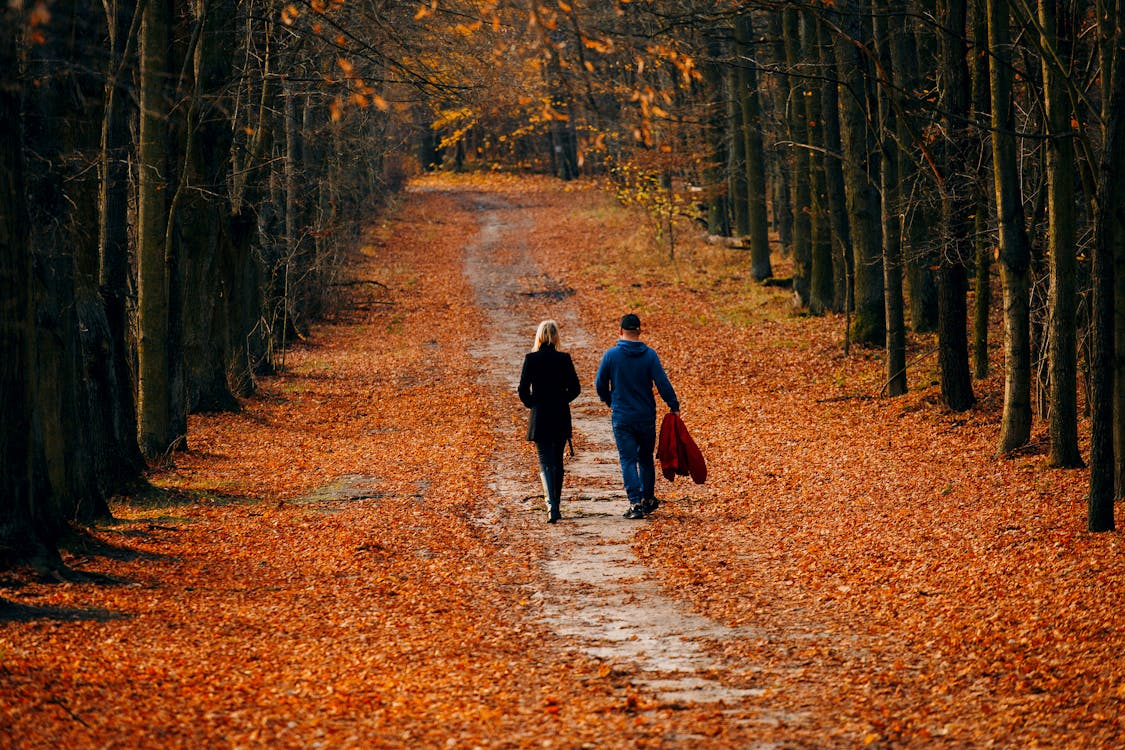
When you’re stuck on a problem, the instinct is often to work harder. You stare at the screen a little longer, reread the same paragraph, or keep turning the same possibilities over in your mind. Sometimes, though, the better strategy is much simpler: get up and walk.
Writers, artists, philosophers, and inventors have long associated walking with good ideas, and research suggests they may have been onto something. Walking appears to be particularly useful during the early stages of creative thinking, when the goal is to generate possibilities rather than settle on a single correct answer. Better yet, you don’t necessarily need a long hike or beautiful trail to benefit. Even a short walk indoors may be enough to help your thinking move in a different direction.
What the Research Says About Walking and Creativity
In a 2014 Stanford University study, researchers Marily Oppezzo and Daniel Schwartz conducted four experiments involving 176 college students and other adults to compare creative thinking while people were walking versus sitting. In one experiment, participants produced an average of about 60% more creative responses while walking.
The researchers were specifically interested in divergent thinking, or the ability to generate numerous possible ideas and solutions. One of their tests asked participants to think of unusual but plausible uses for ordinary objects. Instead of looking for one correct response, researchers measured how many appropriate and original ideas participants could generate. Across the experiments, people tended to perform better on these creative tasks while walking than while sitting.
Just as interestingly, walking didn’t improve every type of thinking. The researchers also tested convergent thinking, which requires narrowing possibilities until you arrive at a single correct answer. Walking didn’t produce the same advantage there and, in one experiment, participants actually performed slightly worse.
That distinction makes walking a more specific creative tool than the familiar advice to simply “take a walk and clear your head.” The research suggests it may be especially useful when you need to generate possibilities, while sitting down and concentrating may still be better when it’s time to evaluate those ideas and choose the strongest one.
You Don’t Need a Scenic Nature Walk
It would be easy to assume that walking encourages creativity primarily because people tend to walk outdoors, where changing scenery, fresh air, and new sensory experiences provide additional stimulation. The Stanford researchers deliberately tried to separate the effects of movement from the effects of environment.
Participants were tested under several conditions: sitting indoors, walking on a treadmill indoors, walking outside, and being pushed along the same outdoor route in a wheelchair. Remarkably, participants walking on a treadmill while facing a blank wall still experienced a boost in creative idea generation. Outdoor walking performed especially well on one task involving creative analogies, suggesting that surroundings may provide an additional benefit, but movement itself appeared to matter independently of the environment.
That makes walking a remarkably accessible creativity tool. You don’t need a picturesque hiking trail every time you’re stuck. You can walk around the office, pace through your house, use a treadmill, take a few laps through a hallway, or walk around the block. A stimulating environment may give your mind additional material to work with, but simply getting your body moving may be enough to change the conditions in which you’re thinking.
Walking Is Especially Useful for Generating Possibilities
Creative work usually involves more than one mode of thinking. At first, you might need to generate possibilities: What could this become? What haven’t I tried? Is there another way to approach this? What would happen if I changed one part of the problem?
Later, you have to evaluate those possibilities. You decide which idea is realistic, which solution is strongest, which headline works best, or which direction you’re actually going to pursue. The first process is divergent; the second is convergent.
Walking appears particularly well suited to the first stage. That makes a walk potentially useful when you’re brainstorming names, developing a story, outlining a presentation, looking for different solutions to a problem, or trying to find a fresh angle on something you’ve been staring at for too long. Once you’ve generated those possibilities, sitting back down may be exactly what you need to sort through them.
Rather than treating walking and focused desk work as competing strategies, it may be more useful to think of them as tools for different stages of the same process. Walk when you need to open up the possibilities. Sit down when you’re ready to narrow them.
Why Does Walking Help Us Think Differently?
Researchers don’t yet have one definitive explanation for why walking appears to encourage creative thinking. Movement may affect attention and cognition in ways that make freer association easier, while leaving a desk or workspace can temporarily remove us from the physical context in which we’ve become stuck. Walking outdoors adds changing sights, sounds, and other sensory information that may create still more opportunities for unexpected associations.
It’s important, however, not to turn a useful research finding into an overly tidy neuroscience explanation. The Stanford researchers noted that more work was needed to understand the physiological and neurological mechanisms behind the effect. What their experiments demonstrated more clearly was the practical result: participants generated more creative ideas while walking, and some of that benefit remained briefly after they sat back down.
For someone trying to get unstuck, the mechanism may ultimately be less important than knowing when the effect is most useful.
See Unexpected Places People Find Their Best Ideas for related creative moments.
Walking Can Interrupt a Stuck Thought Pattern
One reason creative blocks can feel so frustrating is that thinking harder doesn’t always produce different thinking. You can spend half an hour approaching the same problem from essentially the same angle, rejecting each new idea because it resembles something you’ve already considered.
A walk creates a natural interruption. Instead of forcing yourself to solve the problem immediately, you change what you’re doing while allowing the question to remain in the background. The physical shift can also encourage a different relationship with the problem: you’re no longer trying to finish it right now; you’re exploring it.
That exploratory mindset matters because creative thinking benefits from allowing ideas to exist before immediately judging them. If every possibility is discarded the moment it seems impractical, strange, or incomplete, the range of ideas can shrink before anything interesting has a chance to develop. Walking can provide a temporary space where the goal isn’t to decide what will work, but simply to see what occurs to you.
When a Creativity Walk Can Help
Not every task is a good walking task. If you’re proofreading a spreadsheet, checking detailed figures, studying something that requires sustained concentration, or choosing between a small number of established options, getting up and walking may not improve your performance.
Walking makes more sense when you’re working with open-ended questions. You might ask yourself what five different approaches to a problem could look like, what you’re overlooking, how an idea could become more interesting, or what you would try if the most obvious solution weren’t available. These questions invite possibilities rather than demanding one immediate correct answer, which is precisely the kind of thinking walking appears to support.
This also explains why walking meetings can sometimes be useful for exploratory conversations. If the purpose of a conversation is to brainstorm, make connections, or think broadly about a problem, movement may complement the task. A meeting devoted to reviewing detailed documents or making final decisions is another matter.
You Don’t Have to Walk for an Hour
A creativity walk doesn’t need to become another elaborate habit to schedule. In the Stanford experiments, the walking and sitting sessions used to measure creativity lasted roughly five to 16 minutes, depending on the task.
That means you can experiment with walking as a creative tool without rearranging your entire day. If you’ve been stuck at your desk for half an hour, try walking for ten minutes. If you’re struggling with an outline, take the central question with you around the block. If you’re trying to brainstorm several possible approaches to a project, give yourself a short period of movement before deciding which one deserves further attention.
The goal isn’t exercise performance, and there’s no evidence that you need to reach a particular distance, pace, or step count to unlock an idea. In this context, walking is simply a way to change the conditions under which you’re thinking.
Explore How Great Ideas Spread From One Person to Millions for shared idea momentum.
Try a 15-Minute Idea Walk
The next time you feel creatively stuck, try treating a walk as part of the thinking process rather than a break from it. Before you leave, choose one open-ended question. Instead of asking, “What’s the answer?” try something like, “What are some ways I could solve this?” or “What could make this idea more interesting?”
Walk at a comfortable pace without pressuring yourself to arrive at a brilliant solution before you get home. Let yourself generate obvious ideas, impractical ideas, strange ideas, and bad ideas along with promising ones. At this stage, quantity and possibility matter more than judgment. If something worth remembering occurs to you, capture it quickly in a note or voice memo without turning the walk into another session staring at your phone.
When you return, sit down and review what you generated. That’s the point to switch from divergent to convergent thinking. Look for the ideas that have potential, the ones that lead somewhere unexpected, or even two mediocre ideas that might combine into something stronger. The walk opens the field; afterward, you can decide what deserves to move forward.
Walking Isn’t a Magic Creativity Switch
Research showing a creativity benefit from walking doesn’t mean every walk will produce a breakthrough, nor does the Stanford study demonstrate that walking makes every kind of thinking better. Its strongest evidence concerned a temporary improvement in divergent idea generation, which is a much narrower claim than saying walking simply makes people smarter or automatically unlocks creativity.
That narrower finding may actually make the research more useful. Walking doesn’t need to become a lifestyle philosophy or another productivity ritual you’re supposed to perform perfectly. It can simply be one tool in a larger creative process, used when the task fits.
Sometimes you need sustained concentration. Sometimes you need careful evaluation. But sometimes, you need your thinking to become a little less orderly so that a possibility you hadn’t considered has room to appear.
Read Why Boredom Might Actually Be Good for You for another quiet-thinking reset.
When You’re Stuck, Move Before You Push Harder
Creative blocks often tempt us to apply more pressure to the same approach: another ten minutes at the screen, another attempt at the same sentence, another pass through possibilities we’ve already considered. Walking offers a different response.
The next time you’re stuck, stop trying to solve the problem for a few minutes and take the question with you. You don’t need a mountain trail, an hour of free time, or even an outdoor route. Generate possibilities while you walk, then decide what to do with them when you return.
Sometimes the most useful thing you can do for an idea is give it some legs.