
These accidental discoveries reveal an important truth about innovation: breakthroughs often occur when people remain open, observant, and flexible rather than rigidly focused solely on expected results.
Many accidental discoveries that changed history were not the result of carefully planned breakthroughs. Instead, they emerged through accidents, mistakes, unexpected observations, or experiments that initially seemed unrelated to the outcome.
While intelligence and expertise still mattered, curiosity often played the most important role. The people behind these discoveries noticed something unusual and chose to investigate instead of ignoring it.
Penicillin Changed Medicine by Accident
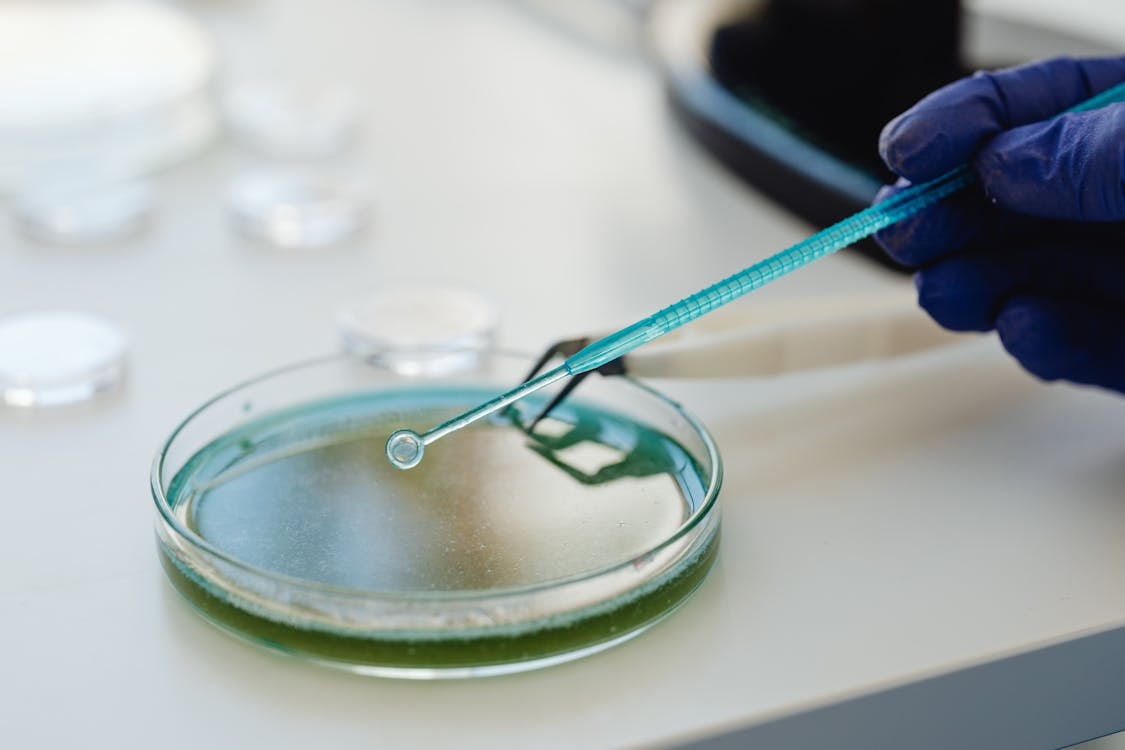
One of the most famous accidental discoveries was penicillin. In 1928, scientist Alexander Fleming returned to his laboratory after vacation and noticed that mold had contaminated one of his Petri dishes.
Normally, contamination would have been considered a failed experiment. Instead, Fleming observed something unusual: bacteria surrounding the mold had been destroyed.
This observation eventually led to the development of penicillin, one of the world’s first major antibiotics. The discovery revolutionized medicine and saved millions of lives.
The key moment was not just the accident itself. It was Fleming’s willingness to pay attention and ask why the unexpected result occurred.
See Everyday Mysteries Science Has Explained for another science explainer.
Microwave Ovens Began With a Melted Candy Bar
The microwave oven also emerged through accidental observation. Engineer Percy Spencer was working with radar technology when he noticed a chocolate bar in his pocket had melted unexpectedly.
Rather than dismissing the incident, Spencer experimented further and discovered that microwave radiation could rapidly heat food.
This eventually led to the development of one of the most common household appliances in the modern world.
Many inventions begin this way. An unusual result appears, and someone becomes curious enough to explore it further rather than move on automatically.
Read Everyday Objects That Inspired Major Inventions for related invention origins.
Post-it Notes Came From a Failed Adhesive
The invention of Post-it Notes began with what initially seemed like failure. Scientist Spencer Silver developed a weak adhesive that did not work well for strong permanent bonding.
Years later, another employee, Art Fry, realized the adhesive could solve a completely different problem by creating removable bookmarks that stayed in place without damaging pages.
A failed adhesive became one of the most recognizable office products in the world because someone creatively reconsidered its purpose.
This highlights an important aspect of innovation: some breakthroughs occur not through perfect execution but by discovering unexpected uses for imperfect results.
X-Rays Were Discovered Unexpectedly
In 1895, physicist Wilhelm Roentgen was experimenting with cathode rays when he noticed a fluorescent screen glowing unexpectedly nearby.
The rays causing the effect were invisible and unknown, leading Roentgen to call them “X-rays.” He soon realized these rays could pass through soft tissue while revealing bones underneath.
The discovery transformed medicine by allowing doctors to see inside the human body without surgery.
Once again, the important factor was attention. Roentgen noticed an unusual phenomenon that others might have overlooked or dismissed.
Potato Chips Came From Customer Complaints
Even popular foods sometimes emerge accidentally. Potato chips were reportedly invented after a customer repeatedly complained that restaurant potatoes were sliced too thick.
In frustration, chef George Crum sliced potatoes extremely thin and fried them until crisp, expecting to annoy the customer. Instead, the customer loved them.
An attempt to solve a small irritation unexpectedly created a globally popular snack food.
Not every accidental discovery changes science or medicine. Some reshape everyday life in surprising ways.
Check Simple Challenges That Can Reignite Motivation for ideas sparked by small problems.
Mistakes Often Reveal Possibilities
Many accidental discoveries that changed history happened because mistakes exposed possibilities that people were not originally seeking.
This is important because modern culture often treats mistakes as purely negative outcomes. In reality, experimentation naturally produces unexpected results, and some of those results become valuable precisely because they were unplanned.
Creative thinking depends heavily on flexibility. People who become too rigidly attached to expected outcomes may overlook opportunities hidden inside mistakes or side effects.
Innovation often requires the ability to recognize potential in something imperfect or surprising.
Curiosity Matters More Than Luck Alone
While luck played a role in many accidental discoveries, curiosity is what transformed accidents into breakthroughs.
Countless unusual events happen every day without becoming meaningful discoveries because most people ignore them or fail to investigate further.
The inventors and scientists behind these breakthroughs shared one important trait: they remained observant and open-minded. Instead of dismissing anomalies immediately, they asked questions and explored possibilities.
Modern life can sometimes discourage this kind of curiosity by prioritizing speed, efficiency, and predictable outcomes. Search behavior increasingly reflects a preference for simplified answers and reduced uncertainty because mental overload makes exploration feel exhausting. Yet many important discoveries begin precisely where certainty breaks down.
Explore How Curiosity Can Improve Your Career and Personal Life for broader curiosity benefits.
Innovation Often Begins Unexpectedly
History shows that breakthroughs do not always emerge from perfect planning. Sometimes innovation begins with contamination, frustration, accidents, or mistakes.
The important difference is how people respond to those moments. Observant and curious individuals often see possibilities where others only see problems.
Accidental discoveries remind us that creativity is not only about controlling outcomes. Sometimes it is about remaining open enough to recognize unexpected opportunities when they appear.