
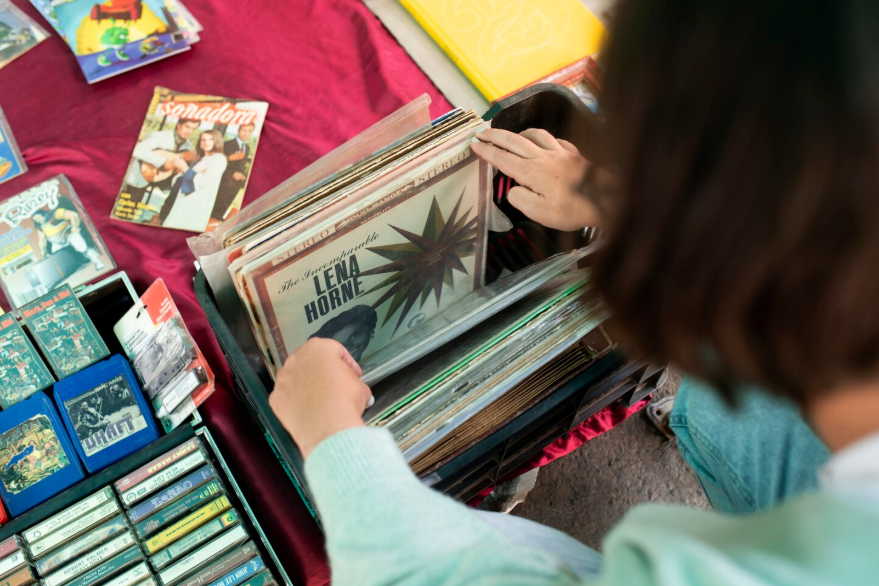
A shelf filled with vintage cameras, a carefully organized stamp album, or a cabinet of colorful pottery might seem like an ordinary collection to someone passing by. To the person who assembled it, however, each object may carry a story. One was discovered during a memorable vacation, another took years to find, and a third belonged to someone important.
Collecting is an extraordinarily varied human activity. People accumulate everything from coins, books, and records to fossils, action figures, postcards, and antique tools. Some collections are valuable, while others have little monetary worth but enormous personal significance.
Why do we enjoy gathering objects that share a particular theme? Psychology offers several possible explanations involving memory, identity, motivation, and our relationships with possessions. Research also suggests that collecting can fulfill different needs for different people, making it difficult to reduce the behavior to a single instinct or personality trait.
Understanding these motivations reveals why collecting can be satisfying even when the objects themselves serve no obvious practical purpose.
Collecting Gives Ordinary Objects Personal Meaning
One of the most important distinctions between a collection and an assortment of possessions is the meaning assigned to the objects.
A person might own several coffee mugs simply because they use them regularly. Another might deliberately collect mugs from places they’ve visited, choosing each one because it represents a particular experience.
The objects may be similar, but their significance is different.
Researchers studying consumer behavior have long examined how possessions contribute to people’s sense of identity. In his influential 1988 paper, Possessions and the Extended Self, consumer researcher Russell Belk argued that people frequently incorporate possessions into their understanding of who they are.
This doesn’t mean our identities are determined by what we own. Rather, certain belongings can represent our experiences, interests, relationships, and personal histories.
A collection of concert posters might reflect someone’s lifelong relationship with music. A shelf of vintage science fiction novels may represent years of reading and discovery. A collection of handmade ceramics could connect someone to particular artists, places, or traditions.
The objects become meaningful partly because of the experiences and associations surrounding them.
The Pleasure of Searching Can Be as Important as Owning
For many collectors, the search is one of the most enjoyable parts of the activity.
Finding a rare book, identifying an unusual coin, or discovering a missing piece in a collection can involve research, patience, and problem-solving. Collectors may spend considerable time learning where objects originated, how to recognize authentic examples, and what distinguishes one variation from another.
The process creates opportunities for anticipation and discovery.
Psychologists distinguish between different aspects of reward, including wanting something and enjoying it once obtained. These processes are related but not identical, and research on motivation suggests that anticipation can play an important role in reward-seeking behavior.
However, it would be misleading to claim that collecting works through a single, scientifically established dopamine mechanism. The psychology of collecting involves many motivations, and laboratory findings about reward processing don’t automatically explain why a particular person enjoys searching for vintage postcards or rare records.
What we can observe is that collecting often provides a series of engaging challenges. A collector identifies something interesting, learns about it, searches for an example, and eventually decides whether to acquire it.
Once that object becomes part of the collection, another question may emerge. Perhaps there’s a different edition, an unfamiliar maker, or an entire category worth investigating.
The activity can remain interesting because acquiring an object often creates opportunities for further exploration.
Collections Help Us Organize and Understand the World
Collecting isn’t always about possessing more things. It can also be a way of organizing information.
Someone collecting seashells may learn to distinguish species, understand different marine environments, and recognize variations in shape and color. A person interested in vintage cameras might develop knowledge of photographic technology, manufacturing history, and industrial design.
As a collection grows, so does the collector’s ability to notice differences that might be invisible to someone unfamiliar with the subject.
Classification becomes part of the pleasure.
Collectors often develop their own systems for organizing objects by date, origin, material, manufacturer, or theme. These systems can make a collection easier to understand while revealing relationships between individual pieces.
A collection of old maps, for example, might illustrate how geographic knowledge and political boundaries changed over time. A group of antique kitchen tools could reveal changes in manufacturing, domestic labor, and everyday technology.
The objects provide a tangible way to explore a larger subject.
This connection between curiosity and collecting helps explain why some collections become lifelong interests. The collector isn’t simply accumulating possessions; they’re developing expertise and discovering new questions to investigate.
For more on the role of curiosity in learning and exploration, see How Curiosity Can Improve Your Career and Personal Life.
Collecting Can Preserve Memories and Personal History
Objects can serve as powerful reminders of people, places, and experiences.
A postcard purchased during a trip may bring back memories of a particular afternoon. A record inherited from a relative might evoke family gatherings, while a childhood toy can represent a period of life that feels distant.
Psychologists sometimes describe the use of objects to prompt autobiographical memories as object-cued remembering. Familiar possessions can help bring experiences to mind by providing sensory and contextual reminders.
This doesn’t mean objects preserve memories perfectly. Human memory is reconstructive, and recollections can change over time. Nevertheless, meaningful belongings can provide cues that help us revisit aspects of our personal histories.
Collecting can also create a record of changing interests.
Someone who has collected books for decades may be able to trace different periods of their life through the subjects they explored. A collection of photographs, ticket stubs, or travel souvenirs might reveal experiences that would otherwise be difficult to recall in detail.
In this sense, a collection can function as a personal archive.
The emotional significance of these objects may have little relationship to their market value. An inexpensive souvenir can be irreplaceable to its owner because of the memories associated with it.
Completing a Set Creates a Satisfying Goal
Many collections are organized around clearly defined goals.
A collector might want every issue of a particular comic book series, one coin from each year of production, or a complete set of figurines released by a manufacturer.
These goals create a sense of structure and progress. Each new acquisition moves the collection closer to completion, while missing pieces provide specific challenges to investigate.
Psychological research on motivation suggests that clear goals and feedback can influence persistence and engagement. Collecting often provides both: the collector knows what they’re looking for and can see how their efforts contribute to the larger collection.
However, not every collector wants a complete set. Some prefer open-ended exploration, acquiring objects that interest them without working toward a predetermined endpoint.
The satisfaction of collecting can therefore come from different sources. For one person, the appeal lies in completing a carefully defined series. For another, it’s the freedom to discover something unexpected.
Both approaches can be meaningful, and neither is inherently more authentic.
Collecting Can Become a Form of Creative Expression
A collection may begin with an interest in particular objects, but assembling and displaying them can become a creative activity in its own right.
Consider someone who collects vintage glassware. They might arrange pieces by color, shape, or historical period, creating displays that emphasize different relationships between the objects.
A book collector may organize shelves around themes or personal associations rather than alphabetically. Someone collecting miniature figures might design elaborate scenes or environments in which to display them.
These choices involve aesthetic judgment, experimentation, and personal expression.
Collectors also make decisions about what belongs in their collections. A person interested in midcentury design might focus on objects from a particular manufacturer, while another might prefer examples that illustrate the evolution of a style.
The resulting collection reflects individual preferences rather than simply the availability of objects.
This creative dimension can make collecting satisfying even when no new purchases are involved. Rearranging a display, researching existing pieces, cataloging objects, or sharing photographs can provide opportunities to engage with the collection in different ways.
Collections Can Create Community and Connection
Although collecting may appear to be a solitary activity, many collectors participate in communities built around shared interests.
Book collectors attend fairs and discuss editions. Record enthusiasts exchange recommendations and research obscure releases. Coin collectors join organizations, visit exhibitions, and share information about historical discoveries.
These communities provide opportunities to learn from people with specialized knowledge.
They can also create connections between individuals who might otherwise have little in common. Someone’s interest in vintage sewing machines, for example, could introduce them to historians, repair specialists, designers, and other collectors.
The social dimension may become as important as the objects themselves.
Collectors can also contribute to preserving knowledge. People who document obscure products, historical artifacts, or discontinued technologies sometimes assemble information that would otherwise be difficult to find.
However, collecting communities aren’t always uniformly positive. Competition, disagreements over authenticity, and pressure to acquire expensive items can create frustration. As with any shared interest, the experience depends partly on the culture of the community and how participants treat one another.
For collectors who enjoy exchanging knowledge without constant competition, shared enthusiasm can make the activity more rewarding.
Why Some People Collect Rare or Valuable Objects
Rarity can influence the appeal of a collectible, but it isn’t the only factor that determines value.
Some objects are sought after because few examples survive. Others become desirable because of historical significance, artistic quality, cultural associations, or demand among collectors.
A rare item may also represent a particularly difficult challenge. Finding it can require extensive research, specialized knowledge, and persistence.
For certain collectors, ownership provides a sense of accomplishment or distinction. An object that few other people possess may feel especially meaningful because of the effort required to obtain it.
Financial considerations can also play a role. Some people purchase collectibles partly because they hope the objects will appreciate in value.
But collecting as an investment introduces risks that differ from collecting for enjoyment. Markets can change, authenticity may be disputed, and the price someone is willing to pay today doesn’t guarantee future demand.
It’s useful to distinguish between personal value, historical significance, and resale value. An object can be deeply meaningful without being expensive, and a costly collectible may offer little personal satisfaction to someone who doesn’t care about the subject.
When Collecting Becomes More Stressful Than Enjoyable
Most collecting is an ordinary leisure activity, but it can become stressful when acquiring objects begins to interfere with other priorities.
Someone might feel pressure to purchase every new release, spend beyond their budget, or devote more space to a collection than their living situation comfortably allows.
These challenges don’t necessarily indicate a mental health condition. They may simply suggest that the activity needs clearer boundaries.
It’s also important to distinguish collecting from hoarding disorder.
According to the American Psychiatric Association, hoarding disorder involves persistent difficulty discarding possessions, a perceived need to save them, and accumulation that substantially compromises living spaces or causes significant distress or impairment.
Having a large collection, enjoying rare objects, or feeling sentimental about possessions does not by itself indicate hoarding disorder.
Collectors typically organize their possessions around identifiable interests or goals, although the distinction isn’t always determined by how neatly objects are displayed.
For someone who finds collecting increasingly stressful, it may help to reconsider purchasing habits, available storage, and the reasons behind new acquisitions. Enjoying a collection doesn’t require acquiring everything associated with a particular interest.
How to Start a Collection Without Spending a Fortune
Collecting doesn’t have to begin with expensive purchases or specialized equipment.
Start with a subject that genuinely interests you. It might be postcards, unusual rocks, vintage photographs, bookmarks, pressed leaves, or small objects connected to places you’ve visited.
Before buying anything, spend time learning about the subject. Libraries, museums, collector organizations, and reputable reference materials can help you understand what you’re looking at and which details are important.
You might discover that the research itself is one of the most enjoyable parts of the activity.
It also helps to establish a comfortable budget and consider how you’ll store or display the objects. Some collections require protective materials, careful handling, or significant space, while others can fit into a small album or box.
There’s no requirement to pursue rare or valuable items. A collection can be organized around personal experiences, visual appeal, historical interest, or almost any theme you find engaging.
If you’re still exploring possible interests, How to Find a Hobby You’ll Actually Stick With offers guidance on choosing activities that fit your schedule, resources, and preferences.
What Our Collections Reveal About Us
Collections can tell stories about what people value, remember, and find interesting.
A collection of fossils may reflect a fascination with natural history. Vintage clothing might connect someone to design traditions or cultural changes. Travel souvenirs can preserve experiences, while a shelf of carefully selected books may represent years of intellectual exploration.
But collections shouldn’t be treated as simple personality tests. Two people can collect the same objects for entirely different reasons, and the meaning of a collection may change over time.
One person might collect coins because of their historical significance, another because of their artistic design, and a third because collecting was a tradition shared with a family member.
The objects themselves provide only part of the story. Understanding why someone collects them requires listening to the experiences and motivations behind the activity.
The Enjoyment of Collecting Goes Beyond the Objects
Collecting can satisfy several interests at once. It provides opportunities to learn, organize information, preserve memories, pursue goals, express personal taste, and connect with other people.
For some collectors, the greatest pleasure comes from discovering something rare. For others, it’s arranging familiar objects, researching their history, or remembering the experiences associated with them.
Psychology helps explain why possessions can carry personal meaning and why activities involving goals, anticipation, and discovery can be rewarding. But there isn’t one universal explanation for why people collect.
A collection’s significance comes partly from the relationship between the collector and the objects they’ve chosen to preserve.
What looks like a shelf of ordinary things to one person may represent decades of curiosity, experience, and discovery to another.